Flying in for a weekend to find your Florida home? With a focused plan and the right local team, you can tour top neighborhoods, compare options, and submit a strong offer before you head back to the airport. If you are relocating to Manatee County or nearby Sarasota areas, you likely have limited time and a big decision ahead. This guide walks you through a white-glove, 48–72 hour approach that turns a short trip into a confident purchase. Let’s dive in.
Before you fly: financing and digital prep
Get your financing and paperwork in order so your weekend is all about seeing homes and making decisions, not chasing documents.
Nail down pre-approval
- Get a written lender pre-approval, not just a pre-qualification. A true pre-approval that has been run through automated underwriting carries more weight and speeds up your offer.
- Ask your lender for a letter with clear conditions and a maximum loan amount tailored to the price range you plan to tour.
Gather your documents
Have digital copies ready to send quickly:
- Government ID
- Last two years of tax returns and W2s or 1099s
- 30–60 days of pay stubs
- 2–3 months of bank and asset statements
- Employer contact for verification
- If self-employed: profit and loss statement and two years of returns
Line up proof of funds
- Prepare recent statements for your earnest money deposit and closing costs. Confirm how fast you can wire funds.
- If you plan to make a cash offer, have proof of funds ready and discuss title timelines with your agent.
Choose a lender who can move fast
- A local lender familiar with Manatee County can coordinate appraisals and underwriting quickly. If you prefer your out-of-state lender, make sure they can meet local timelines.
Set up digital tools
- Electronic signatures are widely accepted for offers and most contract documents in Florida. Confirm your comfort with e-sign platforms before you arrive.
- Ask your title company about remote online notarization or a mobile notary option for closing so you can sign from home if needed.
Pre-screen homes virtually
- Have your agent send floor plans, video walkthroughs, HOA documents, seller disclosures, and neighborhood drive videos before your trip. This lets you focus on serious contenders in person.
Map your weekend: travel and neighborhoods
Manatee County sits just north of Sarasota, with a mix of coastal, suburban, and urban options. Your trip will run smoother if you plan your arrivals and showings around local routes and lifestyles.
- Airports: The closest airport is Sarasota–Bradenton International Airport, which is convenient for quick arrivals. For more flight options, use Tampa International Airport and plan for a longer drive depending on traffic. Check flight times and services at the Sarasota–Bradenton International Airport site or Tampa International Airport site.
- Major roads: I-75 runs north to south inland, US-41 serves local corridors, and SR-64 connects east to west. Group showings to minimize backtracking.
Neighborhood styles to consider:
- Lakewood Ranch and nearby planned communities: amenity-rich, newer homes, and access to parks and dining.
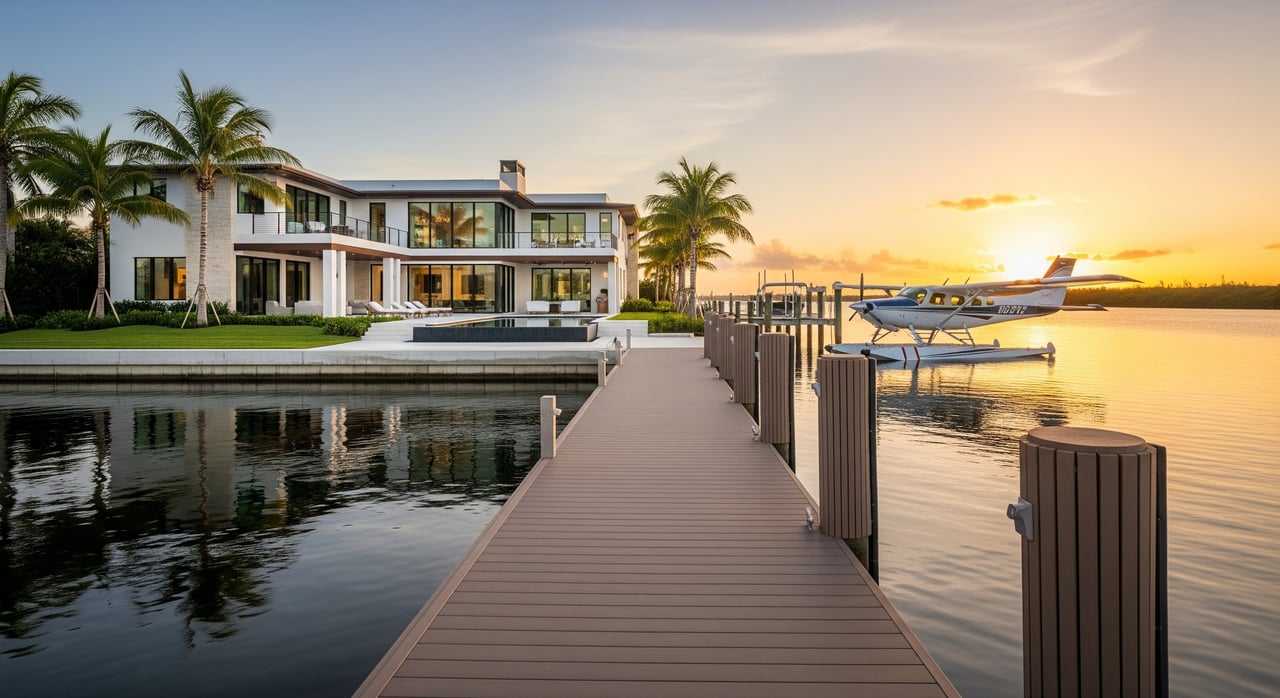
- Barrier islands such as Anna Maria Island, Bradenton Beach, and Longboat Key: coastal lifestyle and vacation appeal. Flood and insurance considerations are important here.
- Downtown and West Bradenton: more urban and historic areas, close to cultural amenities and the riverfront.
- Palmetto and Parrish: suburban value and larger lots in some areas. Some homes may have septic systems rather than sewer.
Before you tour coastal or riverfront homes, review flood zones and elevation. Use the FEMA Flood Map Service Center and learn about coverage through the National Flood Insurance Program.
Your 48–72 hour fly-in itinerary
The goal is to compress discovery, due diligence, and decision-making into one smooth weekend.
Day 0: Arrival and pre-brief (Friday)
- Arrive at SRQ or TPA, pick up a rental car or use a pre-arranged driver.
- Check into a hotel near your target areas, such as Lakewood Ranch, Bradenton, or the islands.
- Join a 20-minute pre-brief with your agent to confirm Saturday’s route and priorities.
Day 1: Neighborhood tour and showings (Saturday)
- 8:00–9:00 AM: Coffee and strategy. Review your shortlist and map a route that groups showings by area and property type.
- 9:00 AM–12:30 PM: First showing block, 2–4 homes. Compare contrasting options, like a waterfront condo and an inland single-family home.
- 12:30–2:00 PM: Lunch and neighborhood walk. Explore beach access, marina options, or town centers to feel the lifestyle.
- 2:00–5:30 PM: Second showing block in a different submarket. If new construction is on your list, visit model homes and confirm build timelines.
- 6:00 PM: Debrief with your agent. If a property rises to the top, loop in your lender to confirm numbers and terms.
Day 2: Deep dive and decision (Sunday)
- 8:00–10:00 AM: Revisit your top contenders. Measure rooms, take photos, and dig into details like roof age, HVAC, seawall condition, and HOA rules.
- 10:30 AM–1:00 PM: Meet or conference with a title company to discuss closing timelines, remote signing, and fee estimates. Ask about wire instructions and ID requirements.
- 1:30–3:30 PM: Final walk-throughs and offer prep. Complete e-signature readiness and confirm offer terms.
- 4:00–6:00 PM: Submit offer. Your agent sends the full package and instructions for earnest money delivery upon acceptance.
If you have a third day
- Add a rapid “pre-offer” contractor walk-through or schedule an immediate inspection as soon as you are under contract. You can also bring in a builder or handyman to estimate potential updates.
Same-day offer playbook
A strong offer is about readiness, clarity, and security.
Contract and key terms
- Florida buyers typically use standardized contract forms adopted by Florida Realtors and the Florida Bar. These forms define price, financing, inspection periods, closing date, and what personal property stays.
- Discuss terms in advance: deposit amount and delivery method, financing and appraisal contingencies, inspection timeline, closing date, and any escalation strategy.
Earnest money deposit
- Common deposits range from 1 to 3 percent of the purchase price, but amounts vary by property and competition.
- Delivery is typically by wire to the agreed title or escrow company. Always confirm wire instructions by phone using a verified number before sending funds.
Contingency strategy
- Inspection period: Negotiate a short but workable window, often about one week. In competitive situations, a shorter period can help, but only if you can complete inspections in time.
- Financing contingency: Use a strong pre-approval and be ready to order the appraisal quickly. Align deadlines with your lender’s timeline.
- Appraisal: Cash buyers can waive appraisal, while financed buyers may use additional down payment or clear escalation language to handle potential shortfalls. Align this with your risk tolerance.
Inspections that matter here
- Standard home inspection plus coastal-specific checks: roof age and permits, salt-air corrosion, HVAC, electrical and plumbing, evidence of water intrusion, slab settlement, termites or wood-destroying organisms.
- Waterfront items: seawall or bulkhead condition can be a major expense. If the property has septic, plan for a full septic inspection and review county records.
Title, closing, and timing
- Typical closing timelines: cash deals can close in roughly 7 to 14 days depending on title clearance, while financed transactions often take 30 to 45 days.
- The title company will run a search and issue a title commitment. Review exceptions and resolve any liens early.
Remote signing and notarization
- E-signatures are common for offers and many contract documents. Closing packages may require notarized signatures. Many local title companies offer remote online notarization or mobile notaries. Confirm procedures, fees, and ID requirements in advance.
Wire security
- Verify all wiring instructions by calling the title company on a trusted number. Use two-factor verification when possible, and treat last-minute changes as red flags.
Concierge support you can expect
A white-glove approach removes friction so you can focus on decisions, not logistics.
Before your trip
- Lender introductions and pre-approval coordination
- Curated showing list and advanced scheduling for early access
- Virtual neighborhood packets, HOA documents, seller disclosures, and links to flood maps
- Travel help: flights, rental car, hotel, or a local driver
- Inspector, surveyor, engineer, and septic vendor recommendations with tentative holds
During your visit
- A driver or team member to keep the day on schedule
- Restaurant reservations and amenity tours such as golf communities or marinas
- On-call document review and instant introductions to lenders and title companies
After offer and through closing
- Earnest money coordination and contingency deadline tracking
- Title company liaison for remote signing and closing disclosure timelines
- Moving coordination: movers, storage, utility setup, vehicle registration, and local guidance
Added value services
- Elevation certificates, prior survey retrieval, and county document requests
- Wind-mitigation or roof certification coordination that may help insurance pricing
For taxes and exemptions, you can look up property records and assess eligibility on the Manatee County Property Appraiser site. For utilities, plan transfers with Florida Power & Light and check service details with Manatee County Utilities.
Local risks and due diligence to prioritize
- Flood zone and elevation: confirm flood zone status and obtain an elevation certificate when available.
- Insurance availability and cost: secure quotes early, especially for coastal and older homes.
- Roof age and hurricane resilience: verify permit history and remaining useful life.
- Seawall or bulkhead condition: review documentation and consider a marine inspection.
- HOA documents and assessments: read rules, budgets, and special assessment history.
- Permitting and additions: confirm that prior work was permitted and closed.
- Environmental or nuisance factors: learn about red tide season impacts and local boating noise in waterfront areas.
What to bring and what we handle
Bring this with you or keep it ready digitally:
- Pre-approval letter
- Proof of funds for deposit and closing costs
- Photo ID
- A simple checklist for each property: roof age, AC age, signs of water intrusion, seawall condition if applicable, drainage and grading, and permit history
What our team handles:
- Logistics, scheduling, and route planning
- Neighborhood context and HOA document retrieval
- Offer drafting, negotiation, and title coordination
- Inspection scheduling and vendor access
- Wire verification steps and remote signing setup
Ready to plan your weekend?
If you are relocating to Manatee County or exploring nearby Sarasota neighborhoods, a focused fly-in weekend can get you from tour to offer with confidence. Our team coordinates everything so you can make a clear decision on your timeline. To start mapping your trip and shortlist, connect with Dianne Anderson.
FAQs
How fast can you close after a fly-in offer in Manatee County?
- Cash purchases can often close in about 7 to 14 days, while financed purchases typically take 30 to 45 days depending on appraisal, underwriting, and title clearance.
Can you sign closing documents remotely if you live out of state?
- Yes in many cases. Local title companies commonly offer remote online notarization, mobile notaries, or mail-away packages. Confirm the process and ID requirements early.
How much earnest money should you plan for in Florida?
- Plan for 1 to 3 percent of the purchase price, adjusted for competitiveness. You will wire funds to the title or escrow company after acceptance and only after verifying instructions by phone.
Do barrier-island homes in Manatee County need special insurance?
- Many coastal or riverfront homes require flood insurance, and homeowner or wind policies can be higher. Obtain quotes early and review elevation certificates and mitigation features.
Which neighborhoods should you prioritize on a short trip?
- Match areas to your lifestyle: Lakewood Ranch for amenitized suburban living, Anna Maria Island or Longboat Key for coastal living, Downtown Bradenton for urban and riverfront options, and Palmetto or Parrish for value-oriented suburban settings.