Bradenton's Historic Homes Have Two Approval Boards, and Only One Shows Up on Your Insurance Bill
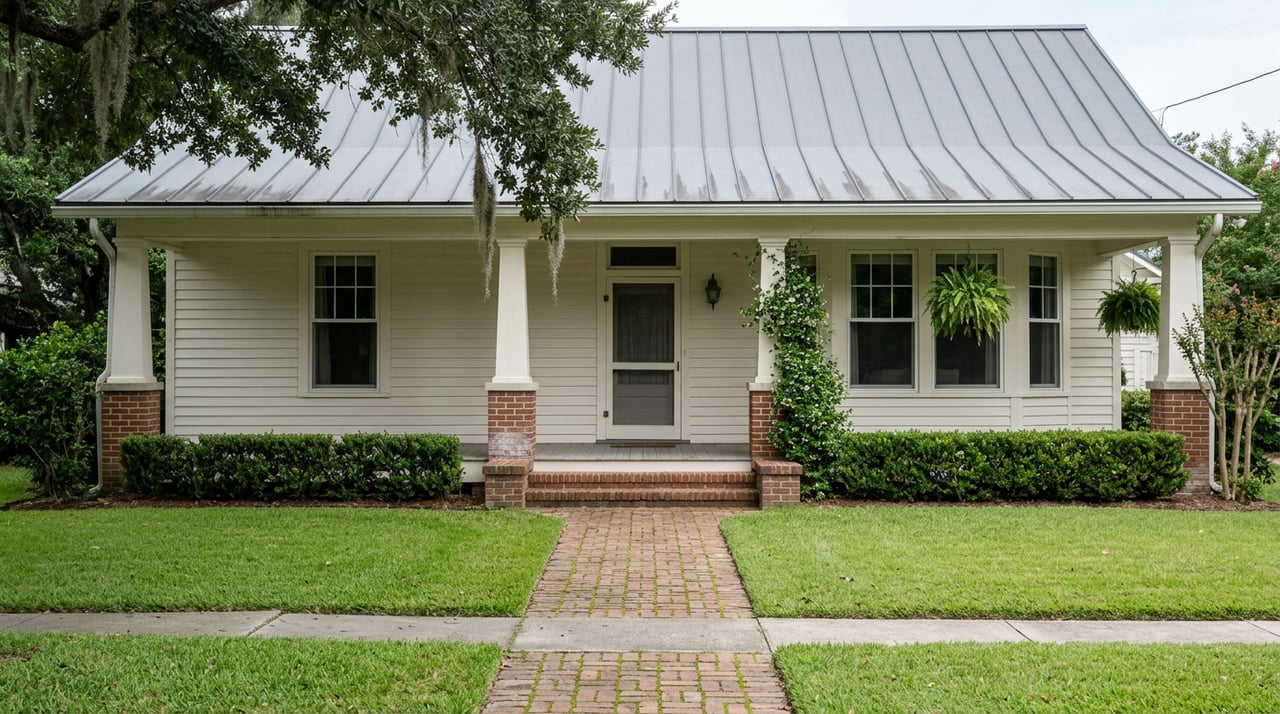
Walk a bungalow on 9th Street West or one of the shaded blocks near the old Village of Manatee and the pitch writes itself: heart pine floors, a deep front porch, a roofline that has survived a century of Gulf storms. What the pitch skips is that this house answers to two completely separate authorities before you can touch it or insure it, and neither one knows the other exists.
Buyers in Bradenton's River District tend to assume "historic" is a single hurdle. It isn't. One track runs through the city's Architectural Review Board, which cares about how the house looks. The other runs through your insurance carrier, which cares about how the house works. A home can sail through one and stall completely on the other, and the two processes have no formal relationship to each other at all.
The City of Bradenton maintains two historic districts: the downtown area around the Historic Courthouse, and the old Village of Manatee, centered near Manatee Avenue East and 9th Street East. Any exterior alteration or signage change on a contributing property in either district requires a Certificate of Appropriateness from the city's Architectural Review Board. Some changes get approved administratively without a hearing. Others go to the board itself, which meets on the first Monday of the month when there's business on the agenda. The board's current members are Gene Bay, Andrew Kelly, John Moody, and Jason Taylor, with one seat currently vacant.
That process governs windows, doors, roofing material, demolition, and anything visible from the street. It has nothing to do with whether the house is insurable. Interior renovations generally don't require historic review at all, so a full kitchen gut and a rewired panel can happen without the board ever seeing a floor plan.
Insurance underwriting runs on a different clock entirely. Because most River District homes were built well before 1950, they fall under Florida's four-point inspection rule, which evaluates roof, electrical, plumbing, and HVAC systems. Citizens Property Insurance, the carrier that ends up writing a meaningful share of older Florida homes, requires a four-point inspection on every dwelling application for a property more than 20 years old, and layers on a specific roof rule: shingle roofs older than 25 years, or metal, tile, or slate roofs older than 50 years, need documentation showing at least five more years of useful life before the company will bind coverage.
Florida's property insurance market has been a fixture of local news for a couple of years, and 2026 brought a genuine shift: several carriers pushed their four-point threshold back from 20 years to 25 or even 30, and some began accepting older roofs with actual cash value endorsements instead of declining coverage outright. If you've been reading about the market loosening up, it's tempting to think that buys some breathing room.
It doesn't, not here. A home built during Bradenton's land boom years, which is most of what's for sale in the historic core, isn't sitting near a 20-year or 30-year line. It's 75 to 125 years past it. Every carrier's threshold, loose or strict, already applies. The 2026 easing matters enormously for a 1998 ranch in East Bradenton. For a 1920s Craftsman bungalow, it's noise. The four-point inspection is happening regardless of which way carrier policy trends this year.
| Architectural Review Board | Four-Point Inspection | |
|---|---|---|
| Governs | Exterior changes, signage, demolition | Roof, electrical, plumbing, HVAC condition |
| Triggered by | Location in a historic district | Home age (20+ years for most carriers) |
| Reviewer | City ARB, meets first Monday monthly | Licensed inspector, hired by buyer or owner |
| Typical cost | Application-dependent; some changes free | $75 to $150 |
| Outcome | Certificate of Appropriateness | Insurability and premium determination |
A clean Certificate of Appropriateness history tells a lender or a buyer that the exterior hasn't been altered without approval. It tells an insurer nothing about the panel in the garage. Renovation projects add another layer worth knowing before you budget: the city's building permit fees run roughly $5,261 to $11,049 depending on project scope, and the fee schedule itself changed on July 1, 2026, with a separate procedural shift for private-provider inspection reporting that took effect May 1, 2026, moving inspection reports into the final Certificate of Compliance packet rather than a standalone two-day submission. None of that touches historic review either. It's a third administrative layer, run by the same permitting division but on its own paperwork.
If you want to see what the far end of "historic renovation" actually looks like, the restoration of the Tole Fogarty House is a useful reference point. Built in 1871 by mariner Bartholomew "Tole" Fogarty in what was then Fogartyville, on the site now known as 3101 Riverview Blvd, the house had been slated for demolition until retired veterinarian Dr. Harold Ott took it on. A two-year restoration led by David Windham Construction, beginning in 2022, preserved the original character while bringing the home's systems up to current standards, the kind of project that touches roof, electrical, plumbing, and HVAC all at once, exactly the four categories an insurer will want documented before writing a policy on the finished product.
Most River District buyers aren't taking on an 1871 relic. But the same principle scales down: a four-point inspection doesn't care that your electrical panel is original to a house with genuine architectural pedigree. It cares whether that panel is a recalled brand, whether the wiring is aluminum, and whether the roof has five years of documented life left in it.
Pricing for River District and near-downtown historic stock has been running roughly $340,000 to $480,000 as of mid-2026, positioning it below Bradenton's newer-construction east side and well below Sarasota's citywide median. Citywide Bradenton median figures vary depending on which tracker you check: one recent read put the three-month median sale price at $320,000 as of the period ending May 2026, while another source reported a $410,000 median in August 2026. That gap says more about how differently trackers calculate "median" than about the market itself, and it's exactly why a single number from a portal shouldn't be the thing you anchor a historic-home budget to. The friction that actually shapes your closing timeline and your first-year costs lives in the two tracks above, not in the headline price.
Before writing an offer on a historic-district property, ask the seller for any Certificate of Appropriateness applications or ARB correspondence on file, request the property's permit history, and schedule your four-point and wind mitigation inspections at the same visit since ordering them together typically costs less than booking them separately. If your inspector flags a Federal Pacific or Zinsco panel or an aging metal roof, get ahead of it before your insurance binder is due. None of this is a reason to walk away from a bungalow with original tile work. It's a reason to build both tracks into your contract timeline instead of discovering the second one after you've already cleared the first.
Does a Certificate of Appropriateness affect my homeowners insurance? No. The two processes are entirely separate. Historic district approval covers exterior changes and has no bearing on how an insurer evaluates your roof, panel, plumbing, or HVAC.
Do I need city approval for interior renovations in a historic Bradenton home? Generally no. Interior modifications typically fall outside historic preservation review. Standard building permits still apply.
Is there an HOA governing River District homes? Most historic Bradenton neighborhoods predate the HOA era and have no association. Design governance for exterior changes runs entirely through the city's Architectural Review Board.
How old does a home have to be before a four-point inspection is required? Citizens requires one for any property more than 20 years old. Private carriers vary, with some pushing the threshold to 25 or 30 years in 2026. For River District homes built in the early 20th century, every carrier's threshold already applies regardless of where it's currently set.
If you're weighing a historic Bradenton bungalow against something newer on the east side of the county, or you just want someone who already knows which board to call first, Dianne Anderson can walk you through both tracks before you're under contract. Let's Connect.
Stay up to date on the latest real estate trends.


My dedication to my clients, proactive communication, determination, and integrity are the core tenants of my business. I lead with respectful and keen negotiation skills, with the ability to cater and adapt to all my client's needs in an ever-changing market. Contact me today!